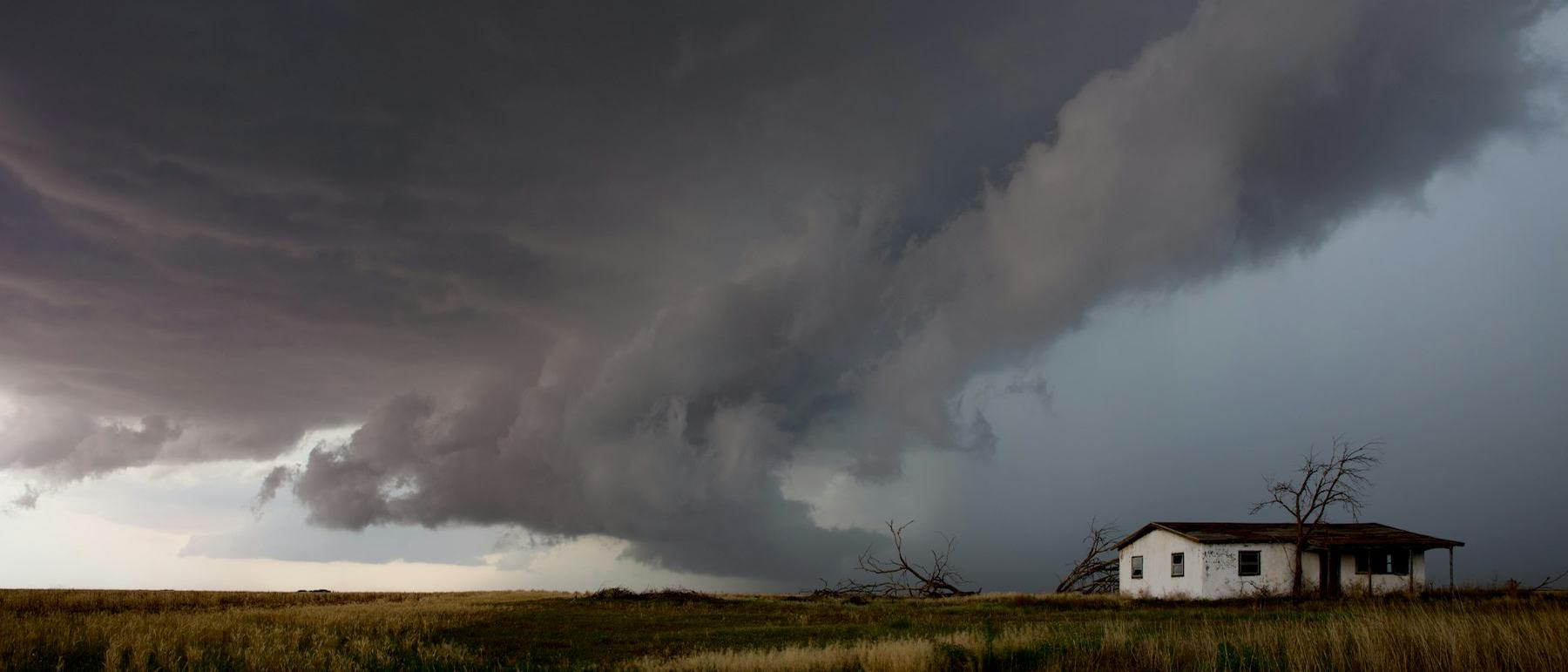
A hail cell moves through Naperville, Bolingbrook, or Orland Park in fifteen minutes and is gone. The roof looks fine from the driveway. Then three months later a neighbor gets a new roof and you wonder whether yours took the same hit.
You can usually answer that question from the ground without climbing anything. Hail leaves marks on soft metals long before it leaves marks you can see on shingles from the street. If the gutters and downspouts are dented, the roof was hit. From there, the first 48 hours are about documenting, not deciding.
Hail season in the Chicago area runs spring through summer, and recent storms have hit the south and southwest suburbs and Northwest Indiana repeatedly. Here is how to check your own house.
Ground-level signs your roof was hit
Walk the property and look at everything that is softer than a shingle. Hail big enough to damage a roof leaves evidence on:
- Gutters and downspouts. Round dents on the top of the gutter and the face of the downspouts. Run your hand along them; you will feel dings you cannot see.
- Window screens, wraps, and sills. Torn screens, dented aluminum window wraps, and chipped paint on sills.
- AC condenser fins. The thin fins on the outdoor unit bend flat where hail struck them.
- Decks, fences, and painted wood. Light splatter marks where hail knocked the weathering off the surface, leaving clean spots.
- Siding. Cracks, chips, and half-moon dents in vinyl and aluminum, usually on the side the storm came from.
Note which sides of the house show the most damage. Storms have a direction, and the roof slopes facing that direction are where an inspector will look first.
What hail actually does to an asphalt shingle
Hail does not usually punch holes in shingles. It bruises them. A hailstone hits the surface, knocks the granules loose in a circular spot, and fractures the fiberglass mat underneath. The bruise is soft to the touch, like a spot on an apple. The exposed mat then takes on water and UV, and the shingle fails from that spot outward over the following seasons.
That is why hail damage is not always a leak today. It is a shortened life for the whole roof. That is why hail is evaluated by counting hits in a marked test square on each slope, not by waiting for water in the attic.
Wind damage looks different
The same storm often brings wind. Wind damage shows up as creased shingles — a horizontal line where the tab folded back and cracked — and lifted or missing tabs, especially at the ridge and along the edges. A creased shingle has lost its seal, and both hail and wind can be part of the same claim.
The first 48 hours: document, then wait
Write down the date and time of the storm. Your policy will want a date of loss, and the carrier will check it against weather data. Note the approximate time, the direction the storm came from, and how long it lasted if you remember.
Photograph everything from the ground. Wide shots to show location, close shots to show the dent. Set your phone to keep location and time in the photo data.
Do not climb the roof. A wet, granule-covered slope is a fall waiting to happen. Let someone with a ladder, a harness, and a chalk stick do it.
Tarp only if you are actively leaking. If water is coming in, cover it and keep the receipt. If it is not, leave the roof alone. Unnecessary tarping can damage shingles and muddy the picture of what the storm did.
Do not sign anything at the door. After a hail event, the neighborhood fills with canvassers. Either way, a contract signed on your porch the day after a storm is a contract you did not read.
Storm-chaser warning signs
Out-of-state plates on a truck with a magnetic logo. Pressure to sign “so we can get you on the schedule.” A promise to “waive your deductible” or “handle everything with insurance” before anyone has looked at the roof. An offer to file the claim for you. A contract that assigns your insurance benefits to the contractor. Any of these is a reason to close the door and get a second opinion from a company with a local address.
A legitimate contractor or public adjuster will inspect first, show you the photos, and explain what they found before asking you to sign anything.
Get a real inspection
An inspection should cover every slope, the soft metals, the siding, the gutters, and the interior for any water staining. You should get photos and a written summary of what was found, whether or not there is enough damage to justify a claim. If there is not, a straight answer saves you a deductible and a claim on your record.
If there is, the next step is a claim with the scope written properly the first time. If you have already filed and gotten a letter that says “covered” but pays nothing, that is an estimate problem, not a denial. And if the claim gets denied outright, here is what the common denial reasons mean and what to do about them.
We are a public adjusting firm and a general contractor under the same name, which means we can look at the damage, handle the claim, and build the roof. Read about how we handle claims that get pushed back before you call anyone.
Think your roof was hit? Request a free inspection through the form or call (903) 952-2766. We will tell you what we found either way.
Quick answers
Can hail damage a roof without causing a leak?
Yes. Hail bruises shingles and fractures the mat under the granules. The roof may not leak for months or years, but its remaining life is shortened, which is why hail is evaluated by counting hits rather than looking for water.
How long after a storm can I file a hail claim in Illinois or Indiana?
Policies vary. Most ask you to report a loss promptly and set a window for filing. Check the conditions section of your policy or ask your agent for the specific timeframe.
Should I get my roof inspected if I don’t see damage from the street?
Yes, if your gutters, downspouts, or AC fins show dents. Shingle bruising is hard to see from the ground, and a free inspection can confirm or rule it out.