You filed a claim after a storm, the adjuster came out, and the letter says the damage is covered. Then you get to the bottom: amount payable, $0.00. The carrier’s estimate came in under your deductible, so nothing is owed.
That is not a denial. It is an estimate, and estimates can be wrong. The carrier agreed a covered event damaged your roof. What it has not agreed on yet is how much it costs to fix it properly. That number is where the argument lives, and it is a number a homeowner can challenge.
We see this letter constantly across Tinley Park, Orland Park, Frankfort, and Mokena after hail and wind. Here is what drives the low number and what to do about it.
Why “covered” and “$0” show up in the same letter
Your policy has a deductible. If the carrier’s estimate of the covered damage is below that deductible, the math produces zero. A letter that says “covered, below deductible” is the carrier telling you two things at once: yes, this was a storm loss, and no, we do not think it costs much to repair.
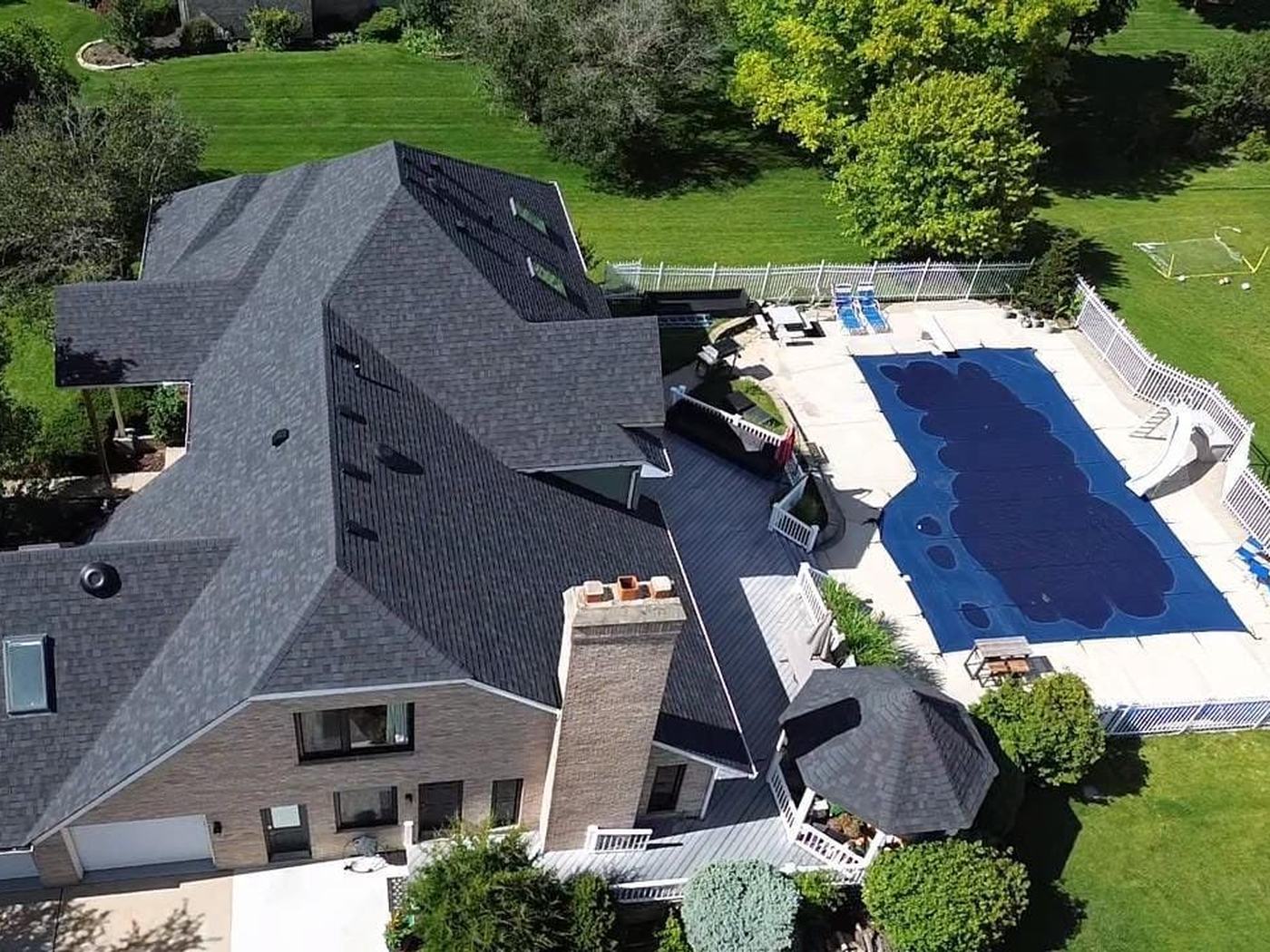
The second part depends entirely on the scope the field adjuster wrote. A short scope — a handful of shingles, a couple of vent caps, a bit of gutter — will almost always land under a typical deductible. A full scope that reflects what a roofer actually has to do to restore the roof often does not.
Where carrier estimates commonly come up short
A roof estimate is a list of line items with quantities and unit prices. When the payout is zero, the problem is almost always on the list itself. The items we check first:
- Measurements. Squares, ridge length, eave length, and waste factor. A roof measured short is priced short.
- Starter course and ridge cap. Separate materials with separate labor. They are frequently left off or bundled into the field shingle price.
- Ice and water shield. Local code in most of our service area calls for it at eaves and valleys. Many carrier scopes omit it.
- Drip edge. Required at eaves and rakes in most municipalities, and easy to forget.
- Second layer. If your roof has two layers, tear-off and disposal double. Adjusters miss this without a close look at the edge.
- Steep and high charges. Pitch above 7/12 and two-story access add labor. These are standard line items in the carrier’s own estimating software.
- Gutters, siding, and soft metals. Hail that hit the roof usually hit the gutters, downspouts, window wraps, and siding too. If the field adjuster only looked up, these are missing.
- Repair versus replace. A scope that “repairs” twenty shingles on a fifteen-year-old roof ignores whether matching shingles exist and whether the old ones survive being lifted.
Any one of these can move the estimate. Several together routinely move it well past the deductible.
What a re-inspection changes
You can ask the carrier for a re-inspection, and you can have your own representative present.
The difference at a second inspection is preparation. A proper re-scope means every slope, chalk-marked test squares, photos of each hit, a look at the gutters and soft metals, a check for a second layer at the rake, and a written estimate in the same format the carrier uses. Two people looking at the same roof with the same measurements in hand tend to argue about far less.
A public adjuster’s role in a re-scope
A public adjuster works for you, not the carrier. On a below-deductible letter, the job is to read the policy, inspect the roof, write a complete estimate in the carrier’s format, and submit it with photos and measurements as a supplement to the original scope. If the carrier holds its number and the policy has an appraisal clause, that clause is a way to resolve a disagreement about the amount. Here is what a public adjuster actually does, step by step.
What to send us
If you have one of these letters, we can usually tell you within a day whether the scope looks complete. Send three things.
The letter. The whole thing, including the page that shows the deductible and the “amount payable” math.
The carrier’s estimate. This is a separate document, usually several pages, with line items and quantities. If you did not receive it, ask your adjuster for it. You should be able to see how the number was built.
Photos. Anything you have — the adjuster’s photos if they shared them, your own from the ground, and pictures of dented gutters, downspouts, or AC fins. Do not climb the roof. If you are not sure what to look for, this guide to spotting hail damage from the ground covers it.
From there, we inspect, re-scope, and tell you honestly whether there is enough on the roof to change the outcome. Sometimes there is not, and we will say so. We are not attorneys and we do not promise results, but we do not give up on claims because the first number was small.
When the roof does need to be replaced
If the scope ends up supporting a full replacement, the second half of our name matters. Trident Construction Group is a general contractor. We build what the claim covers, and the estimate we argued for is the scope the crew works from. Common shingles in our area are IKO Cambridge, IKO Dynasty, and GAF architectural lines, and we can walk you through the roof systems we install before anything is ordered.
Got a “covered, $0” letter? Send it over through the form or call (903) 952-2766. We will read the estimate and tell you what is missing.
Quick answers
Is “covered but below deductible” the same as a claim denial?
No. The carrier agreed a covered event caused damage; it just estimated the repair cost below your deductible. The scope and price can still be challenged with a more complete estimate.
Can I ask my insurance company to re-inspect my roof?
Yes. You can request a re-inspection and have your own contractor or public adjuster present. Bring measurements and photos so both sides are looking at the same information.
Does a claim that paid $0 still show up in my claim history?
A claim record is typically created when you report a loss, whether or not money is paid. Carriers treat zero-paid claims differently, so ask your agent how yours handles them.